Home › Commercial Concrete Slabs and Flatwork
Superior Concrete Omaha pours commercial concrete slabs and flatwork for warehouses, retail centers, and industrial facilities in Omaha, NE. We deliver level, durable surfaces designed for heavy loads, equipment traffic, and long-term performance.
Superior Concrete Omaha provides professional commercial concrete slab throughout Omaha, NE, Nebraska and the surrounding area. Our licensed, insured crew delivers safe, clean, on-time work with a free estimate before anything begins. Call (402) 685-8824 or request your free quote.
Commercial Concrete Slabs in Omaha Built for Real-World Use
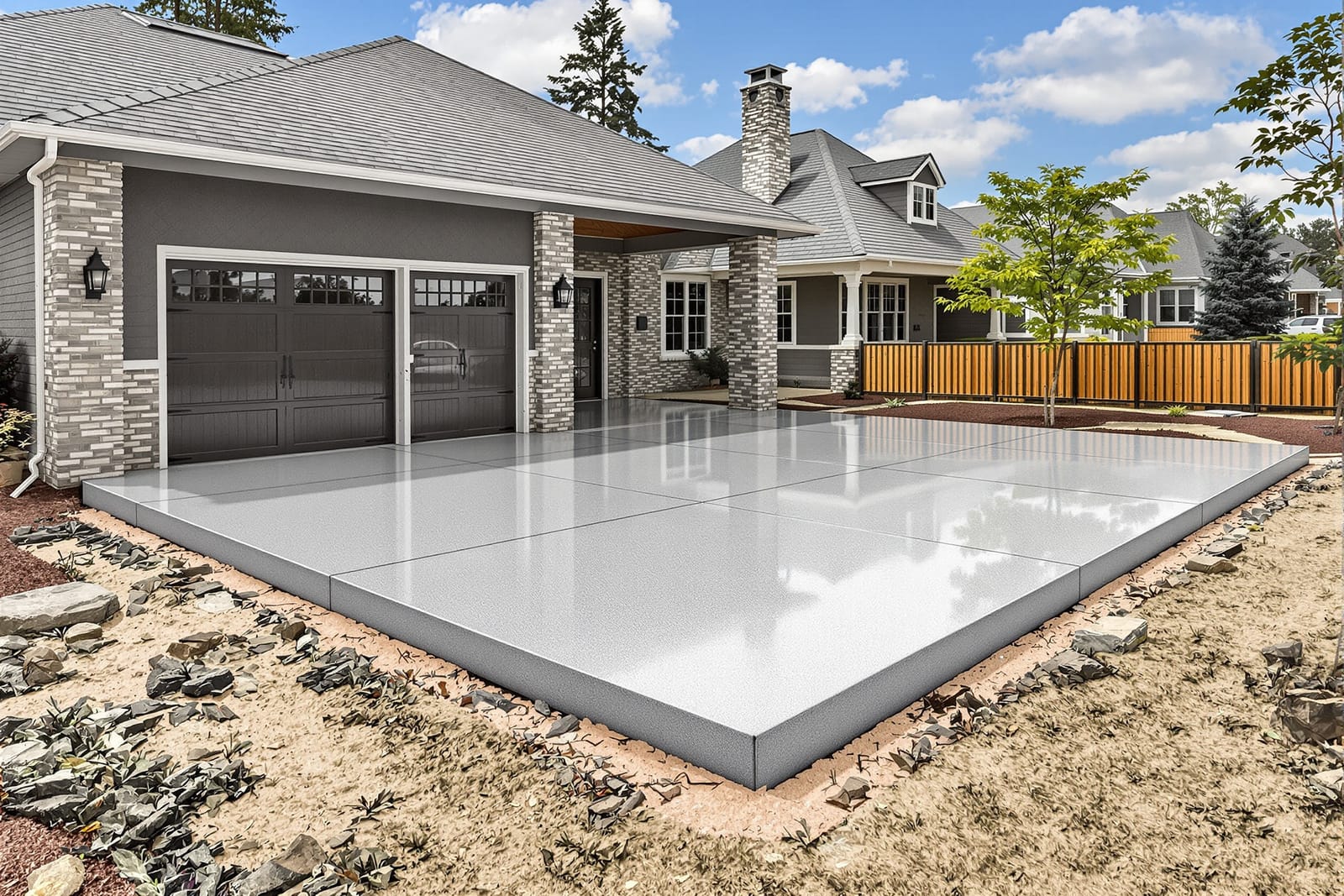
When your business depends on a concrete floor or outdoor slab, you cannot afford curling, cracking, or an uneven surface. Superior Concrete Omaha focuses on commercial concrete slabs and flatwork that hold up to forklifts, heavy shelving, customer traffic, and Nebraska temperature swings.
We work on projects like warehouse floors, light-industrial slabs, retail and restaurant interiors, parking pads, dumpster pads, approaches, and exterior walkways. Each of these needs a different slab design. For example, a warehouse aisle that sees forklift traffic needs a thicker slab and tighter flatness tolerances than a basic storage room. A restaurant patio needs a finish that is slip resistant when wet but still looks good.
Instead of using a one-size-fits-all mix, we look at your intended use, expected loads, and schedule. From there, we set the slab thickness, reinforcement style, joint spacing, and concrete mix design to fit your actual needs. On many Omaha projects that might mean a 6 inch slab with rebar or dowel baskets at control joints in loading areas, and a 4 inch slab with fiber reinforcement for lighter duty sidewalks or patios.
Our goal is simple: give you a commercial concrete slab that stays serviceable for the long term so you are not shutting down operations for repairs every couple of years.
How We Install Commercial Concrete Slabs and Flatwork
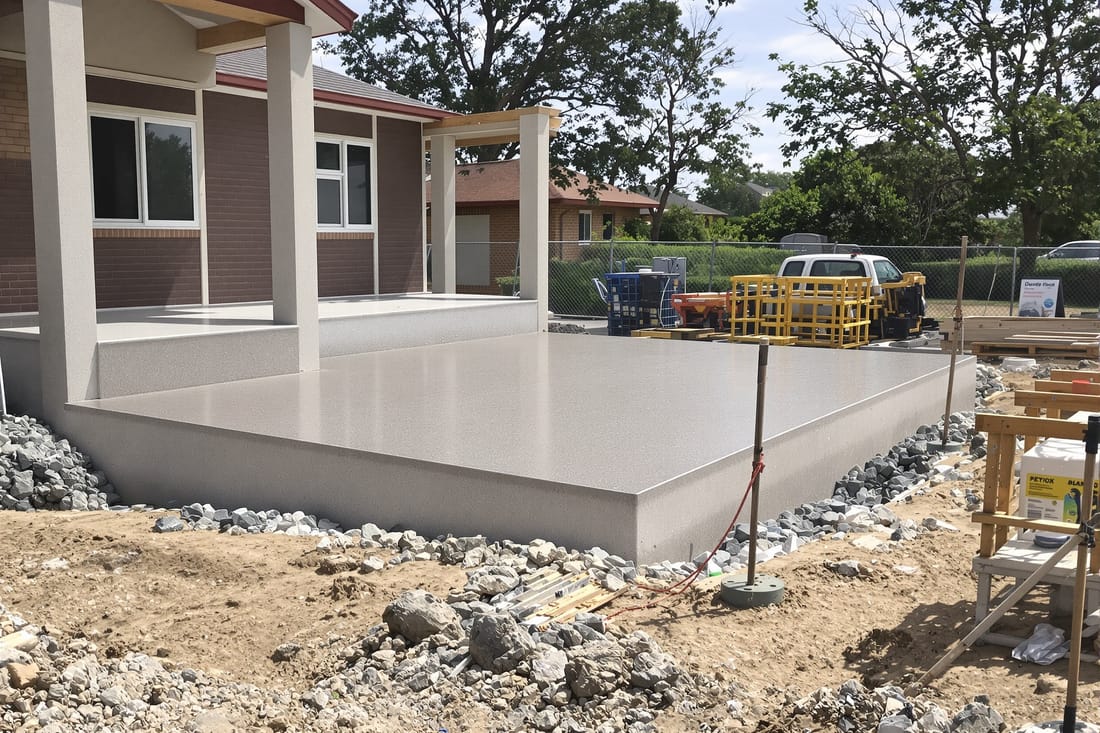
Every commercial slab project in Omaha starts with a site visit. We measure, check existing grades, locate utilities, and talk through how the space will actually be used. For interior slabs, we look at access for concrete trucks or pumps, how you plan to run plumbing or electrical through the slab, and where future equipment or racking might sit.
After planning, we move into subgrade prep. We strip organic material, proof-roll the subgrade to look for soft spots, and install a compacted granular base, usually 4 to 6 inches of crushed rock. Proper compaction is what keeps your slab from settling differently in different spots. If your project is in a part of Omaha with poor native soil, we may recommend thicker base or soil stabilization.
Formwork is set to the exact elevations needed, including slopes for drainage on exterior flatwork. At this stage we also install any edge thickening, step-downs at doorways, and block-outs for pits or equipment. For commercial work we commonly place welded wire fabric or #4 rebar grids on chairs so the steel ends up in the right part of the slab instead of sitting on the gravel.
We then pour the concrete, usually a 4,000 psi air-entrained mix for exterior slabs in Nebraska’s freeze-thaw climate, and sometimes a higher strength or special mix for heavy loads or fast-track schedules. During the pour we use vibrators at thicker areas, work to avoid segregation, and strike off with laser-guided tools when flatness is critical. Finishing can range from a hard troweled interior surface for retail use to a broom or tined finish on exterior flatwork for slip resistance.
Once the surface has set enough, we saw control joints at the correct depth and spacing, typically within 6 to 18 hours depending on temperature and mix. Proper joint layout is one of the main ways we control cracking. Finally, we apply curing compound or start a wet cure process so the slab gains strength evenly and avoids surface dusting.
Local Codes, Permits, and Omaha-Specific Considerations
Omaha and surrounding communities in Douglas and Sarpy County have specific requirements for commercial concrete slabs and flatwork, especially exterior work that connects to public sidewalks, alleys, or streets. Superior Concrete Omaha is familiar with local code requirements and inspection steps, so we coordinate our work to avoid delays.
On commercial projects, it is common for the engineer of record to specify slab thickness, reinforcement, and concrete strength. We review the drawings, flag conflicts we have seen cause issues in the field, and coordinate with the engineer or architect when necessary. For parking lots, approaches, and approach ramps, the city may require particular slopes for drainage and accessibility. We set forms and verify elevations to meet ADA and local drainage guidelines so you do not end up with ponding water at entrances or noncompliant slopes.
Freeze-thaw cycles in eastern Nebraska are tough on exterior concrete. We typically use air-entrained mixes, proper base prep, and attention to drainage so water does not sit on or under the slab. For loading docks and dumpster pads where deicing salts are common, we may recommend a higher strength mix and a penetrating sealer after the initial cure period.
If your project is in a business park or commercial HOA, there may be appearance and access rules for construction work, such as working hours, concrete truck routes, or required finishes facing public areas. We coordinate with property managers to schedule pours, protect landscaping, and maintain safe access to neighboring businesses during the work.
What Drives Cost and How We Help You Control It
Many owners ask why bids for commercial concrete slabs can vary. The main drivers of cost are slab thickness, reinforcement type, concrete strength, base preparation, and access for equipment. A 6 inch slab with rebar on a thick compacted base will cost more than a 4 inch slab with fiber only, but in a warehouse with racking and forklifts, that extra cost often prevents serious repair bills later.
Subgrade issues can also affect price. If the existing soil is soft or holds water, we might need to undercut and replace it with suitable fill or increase base thickness. In Omaha we often encounter areas with fill soil from older construction. We will let you know if test rolling or probing shows a risk for settlement and give you options with clear cost differences.
Access is another driver. If concrete trucks can back right up to the forms, costs are lower. If the slab location is behind an existing building or up a ramp, we may need to use a concrete pump or telebelt, which adds to the budget. On tight downtown sites, we also plan for traffic control and staging to keep the project moving.
Superior Concrete Omaha helps you manage costs by separating must-haves from nice-to-haves. For example, you may need a higher strength mix in heavy traffic aisles but can use a standard mix in a storage area. Or we can use sawcut joints with dowel baskets at key transitions instead of more expensive full-depth thickened sections everywhere. We explain tradeoffs in plain language so you can choose where to invest and where to save without sacrificing slab performance.
Common Problems With Commercial Slabs and How We Prevent Them
Most of the slab issues we are called to repair in Omaha come from three causes: poor base preparation, bad joint layout, or rushing finishing and curing. These problems look like random cracking, slab curling at joints, surface dusting, and edges breaking down under traffic.
To prevent these, we follow consistent quality checks. Our crews verify base thickness and compaction, not just visually, but by proof-rolling and checking soft spots before placing concrete. We coordinate with your mechanical and plumbing contractors so trenches under the slab are properly compacted, not loosely backfilled. That extra step dramatically reduces settlement cracking later.
For joint layout, we plan patterns that work with the building’s column grid, door openings, and expected traffic paths. Joints spaced too far apart or placed in the wrong locations almost guarantee random cracks. We keep panels as square as practical, saw joints as soon as the concrete is strong enough, and use load-transfer devices where heavy traffic crosses joints.
Surface problems are often caused by finishing too early or letting concrete dry out too quickly, especially in hot or windy Nebraska weather. We watch the weather forecasts and adjust start times, crew size, and curing methods. On hot days we might pour earlier in the morning, use set-control admixtures, and apply curing compound immediately after finishing. For interior slabs that will receive epoxy or polished concrete, we pay close attention to flatness and minimize surface contamination so your flooring contractor has a better base to work with.
If you already have a problem slab, we can evaluate whether joint routing and sealing, partial depth repairs, overlays, or replacement make the most sense. Our experience with both installing and fixing commercial concrete flatwork means we can help you avoid repeating the same mistakes on your next project.