Home › Commercial Stamped and Decorative Concrete
We install commercial stamped and decorative concrete for plazas, courtyards, and storefronts throughout Omaha, NE. Our team delivers attractive patterns and colors that stand up to high foot traffic and reinforce your property branding.
Superior Concrete Omaha provides professional commercial stamped concrete throughout Omaha, NE, Nebraska and the surrounding area. Our licensed, insured crew delivers safe, clean, on-time work with a free estimate before anything begins. Call (402) 685-8824 or request your free quote.
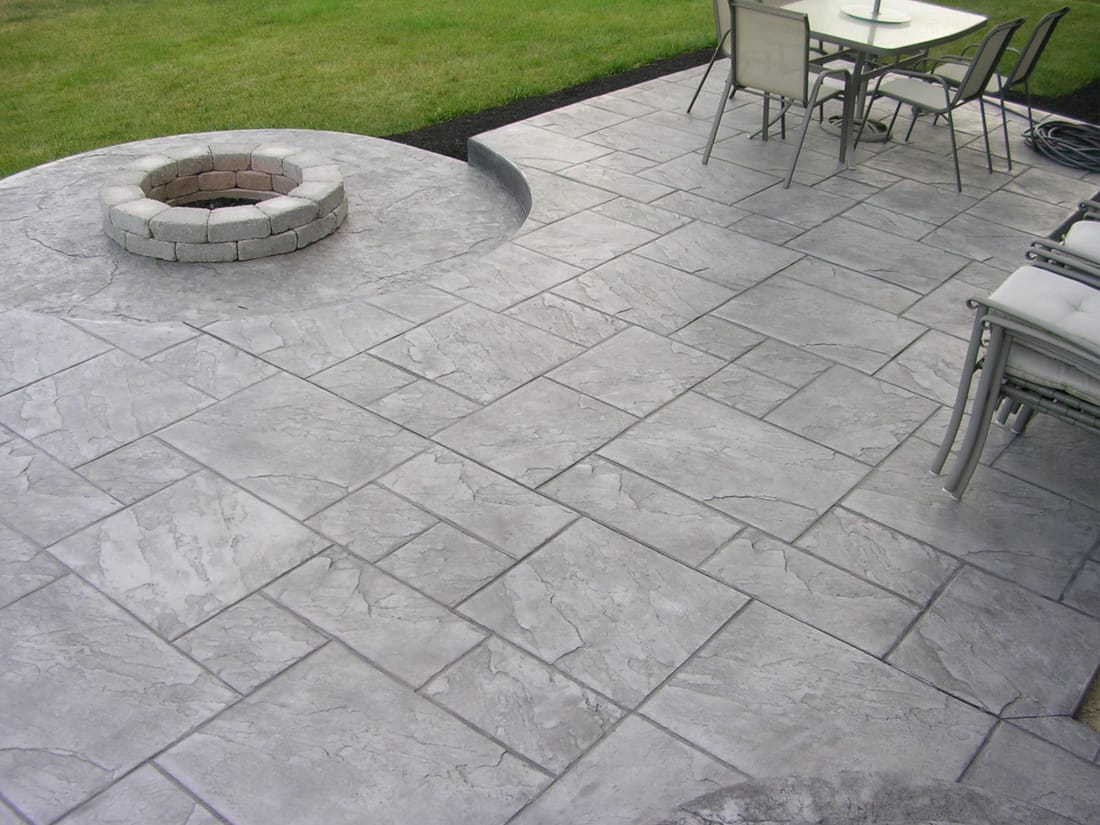
Commercial stamped concrete that works as hard as your business
Commercial stamped concrete is about more than looks. In Omaha, your concrete has to handle forklifts, delivery trucks, freeze-thaw cycles, and heavy foot traffic, while still giving customers a good first impression. Superior Concrete Omaha focuses on stamped and decorative concrete that is built for commercial use first, then customized to match your brand and property layout.
For storefronts, restaurants, offices, and industrial sites, we design surfaces that guide traffic, shed water correctly, and stay safe under Nebraska winters. Typical applications include entry plazas, walkways, patios, courtyards, loading zone aprons, and drive lanes that need a higher-end look without the maintenance headaches of pavers. We match texture to use: deeper textures and slip-resistant finishes near entrances and in sloped areas, tighter patterns near doors and thresholds where carts and wheelchairs need smoother travel.
Before any design talk, we look at the site conditions. Omaha’s clay soils, drainage patterns, and freeze depth matter when deciding slab thickness, base prep, and joint layout. Commercial stamped concrete is a structural pour with decorative finishing on top. If the base or reinforcement is wrong, no pattern or color will save it. Our crews start every project by treating it as concrete infrastructure, not just a cosmetic overlay.
How the stamped concrete process actually works on a commercial site
A typical commercial stamped concrete job with Superior Concrete Omaha follows a set sequence so we avoid surprises and downtime for your business.
1) Site evaluation and planning. We walk the property, note traffic patterns, loading areas, and ADA routes, then discuss how you use the space day to day. We locate existing utilities, check slopes, and measure where water is actually going during a storm. That determines where we cut joints, pitch the slab, and possibly add drains so meltwater in February does not refreeze near doors.
2) Base preparation. We excavate to the required depth, usually 4 to 6 inches below finished grade for pedestrian areas and more for light vehicle traffic. We install and compact a crushed rock base (commonly 3/8 or 3/4 inch limestone or recycled concrete) in thin lifts using plate compactors or rollers. In Omaha’s freeze-thaw climate, a solid, well-drained base is what keeps stamped slabs from heaving or settling.
3) Forms and reinforcement. We set forms to the design elevations, double-check slopes away from buildings, and place reinforcement. For commercial stamped concrete we typically use rebar grids or welded wire mesh, sometimes fiber-reinforced mixes as well, depending on expected loads. On loading aprons or drive lanes, we may increase slab thickness and reinforcement density.
4) Concrete placement, color, and stamping. We pour a concrete mix designed for exterior use in our region, usually 4,000 psi or greater, with air entrainment to handle freeze-thaw. Color can be integrated into the mix or applied as a color hardener at the surface. While the concrete is still plastic but firm enough to hold an impression, we apply a release agent and place stamping mats in the chosen pattern, working in a planned sequence so texture is consistent and joints line up.
5) Detailing, sawcutting, and curing. Once the concrete has set enough, we wash off excess release, cut control joints at planned intervals, and apply cure-and-seal products or curing methods appropriate to the weather. Good curing is what keeps color more uniform and helps minimize surface crazing and early wear.
We plan the staging, access, and barricades so customers can still reach your doors when possible. On multi-phase projects, we often pour in sections so you are never fully shut down.
Patterns, colors, and finishes that hold up in Omaha weather
Design choices on a commercial stamped concrete project are not just about style, they have to work in snow, ice, and summer heat. Superior Concrete Omaha helps you pick patterns and finishes that stay safe and cleanable.
Pattern options often used on commercial sites include ashlar slate, large-format stone, seamless textures, boardwalk or wood plank, and cobblestone or brick looks. For plazas that see carts, furniture, or pallet jacks, we usually recommend larger, less intricate patterns so wheels do not snag on joints or deep grout lines. Near doors and steps, we may blend a broom finish with a stamped border to keep traction high where it matters most.
Color options include integral color, color hardeners, and stains. Integral color runs through the slab, which is great for high-traffic areas where the surface will inevitably wear. Color hardeners give a richer, more durable surface color but require more careful installation and curing. We commonly work with earth tones, charcoal borders, and multi-tone antiquing to mimic stone without making snow and salt stains too obvious.
Sealers are chosen based on how the area is used. In Omaha, exterior stamped concrete needs a breathable, UV-resistant sealer that can handle deicing salts and frequent freeze-thaw cycles. On restaurant patios and entryways, we often use sealers with added traction aggregate to reduce slipperiness when wet. We also talk through realistic maintenance: how often to re-seal, what cleaners to avoid, and what to do if oil, grease, or rust stains appear from vehicles or metal furniture.
If your building has existing concrete or pavers, we can design transitions that do not create trip edges. That might mean feathered grades, specialty sawcut borders, or using a similar color family so the new stamped concrete looks intentional instead of like a patch.
Cost factors, scheduling, and how to avoid common problems
Commercial stamped concrete costs more than plain broom-finished slabs but less than many paver or natural stone installations, especially on larger areas. At Superior Concrete Omaha, we price based on square footage, thickness and reinforcement, shape and layout complexity, pattern and color system, site access, and how much existing concrete or soil must be removed.
Tight or complicated sites, such as downtown Omaha storefronts or interior courtyards, may require smaller equipment, pump trucks, or night and weekend work, which affects cost. Heavy-load areas, like drive lanes and loading zones, need thicker slabs and more steel reinforcement. Complex pattern changes, inlays, or logo work add time for layout and detailing.
There are common problems with stamped concrete that we plan around from the start. These include surface scaling from deicing salts used on icy days, random cracking from poor joint layout, slippery surfaces on steep slopes, and color blotching if curing is not handled well. To prevent these, we use air-entrained mixes, proper joint spacing and depth, traction-focused textures or additives, and curing and sealing systems that match our typical Omaha weather swings.
Timing also matters. In eastern Nebraska, the best window for exterior stamped concrete is usually late April through October. Early spring and late fall pours can work if we use blankets and cold-weather procedures, but those can add cost. We avoid stamping on extremely hot or windy days when possible, or adjust with set controls, evaporation retarders, and more manpower to keep a uniform texture across the slab.
On commercial projects, we also plan around your busy times. Retail sites may prefer pours early in the week to be ready for weekend traffic. Restaurants might choose early morning pours so sections can reopen by evening. We coordinate phasing, barricades, and signage so customers know where to walk and you do not lose business because of confusion or blocked entries.
What to expect when you hire Superior Concrete Omaha
When you bring in Superior Concrete Omaha for commercial stamped and decorative concrete, we start with a clear conversation about use, not just appearance. We want to know what drives over the concrete, how often it is plowed, where snow piles go, and what cleaning chemicals your staff uses. Those details change the design.
Our estimates break out the major parts of the job: demolition and removal if needed, base prep, thickness and reinforcement, pattern and color system, sealing, and any special details like borders, steps, or drainage components. This helps you compare our proposal with others on something more meaningful than just a price per square foot.
Before work begins, we provide a schedule and phasing plan, including how long each area will be inaccessible. On busy commercial sites, we frequently pour in zones so you keep at least one main access open. We set expectations on curing times, when light foot traffic is allowed, and when heavier loads like deliveries and forklifts can return.
After the pour and stamping, we walk the project with you and point out joints, drainage paths, and any areas that may need special winter care, such as shaded entries that ice up faster. We also provide simple written guidance on maintenance: which deicers are safer for stamped concrete, how to handle snow removal without gouging the surface, and when to plan for resealing.
Our goal is that your commercial stamped concrete looks sharp for customers, but also holds up to years of Nebraska weather and use. By focusing on structure first, then pattern and color, Superior Concrete Omaha helps you avoid the short-lived “showpiece” and instead get a surface that actually serves your business.