Home › Concrete Driveway Installation
Our concrete driveway specialists in Omaha, NE design and pour driveways that stand up to heavy use and harsh weather. We focus on proper base preparation, reinforcement, and drainage so your new concrete driveway looks great and lasts for decades.
Superior Concrete Omaha provides professional concrete driveway throughout Omaha, NE, Nebraska and the surrounding area. Our licensed, insured crew delivers safe, clean, on-time work with a free estimate before anything begins. Call (402) 685-8824 or request your free quote.
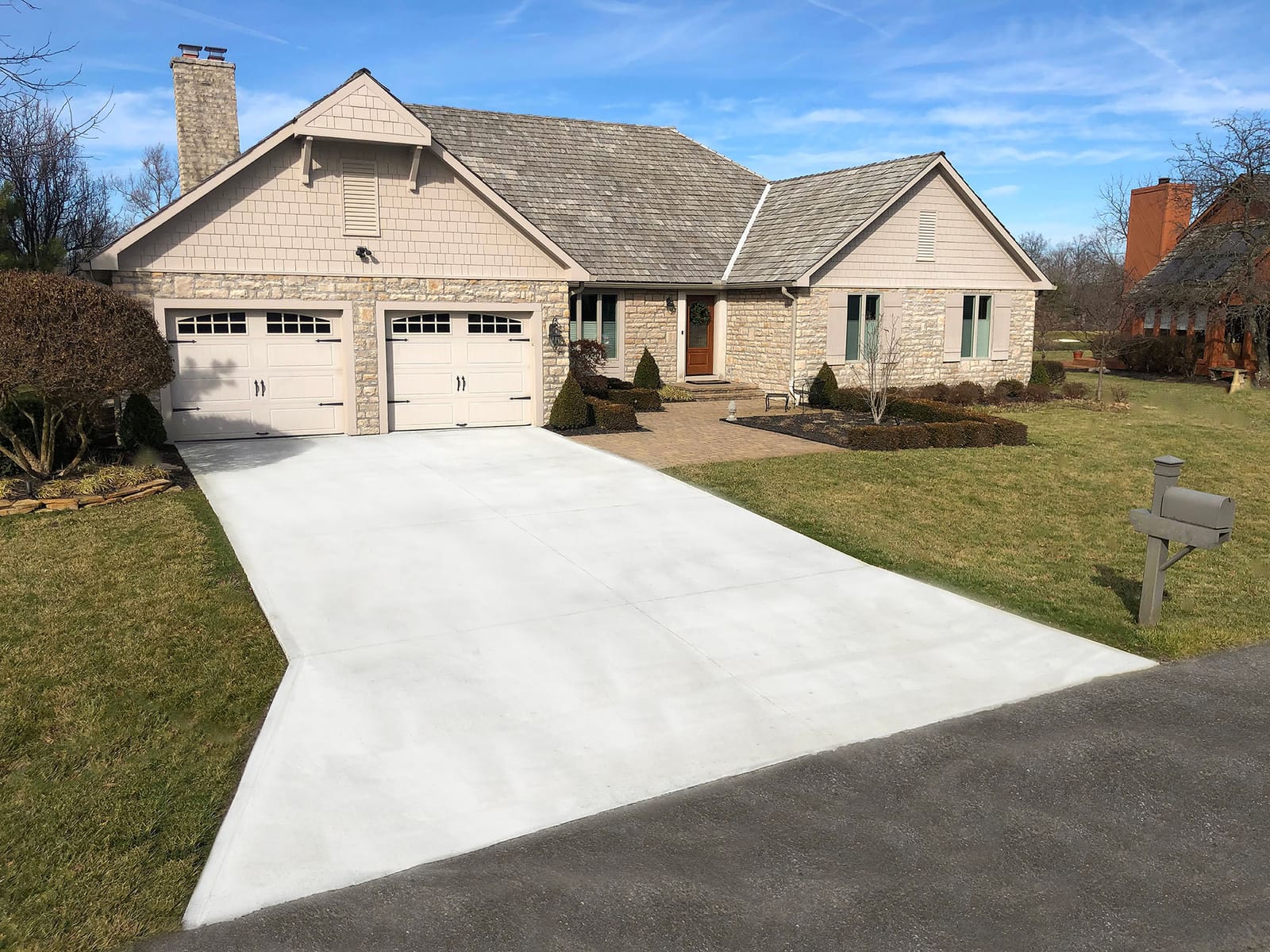
Concrete driveways built for Omaha streets, winters, and soil
A concrete driveway in Omaha has to handle more than parked cars. It faces freeze-thaw cycles, deicing salts, clay soils that move with moisture, and heavy pickup trucks and trailers. At Superior Concrete Omaha, our driveway installations are engineered around these local realities, not a generic national standard.
We start by looking at three things on your property: existing grade and drainage, soil conditions, and how you actually use the driveway. A family with two sedans and a snowblower needs a different design than a contractor backing trailers across the same slab every day. We then size the slab thickness, choose the right concrete mix, and plan joints and reinforcement for your specific use and your specific lot, so the driveway stays solid and safe for many winters.
How we install your concrete driveway, step by step
Our concrete driveway installation process in Omaha follows a strict sequence so the slab can handle temperature swings and traffic for decades.
1) Layout and planning. We mark the exact footprint, vehicle paths, and transitions to sidewalks, garages, and streets. We confirm clearances for trash trucks, snowplows, and delivery vehicles, which are common stress points where driveways first crack.
2) Demolition and removal. Old concrete or asphalt is broken up and hauled to an approved recycling or disposal site. We remove soft spots and organic material, not just the visible slab, so the new driveway does not inherit hidden voids.
3) Excavation and base prep. We typically excavate 8 to 12 inches depending on soil conditions. A compacted aggregate base (usually 4 to 6 inches of crushed concrete or limestone) is installed and mechanically compacted in lifts. In Omaha's clay-heavy neighborhoods like Millard and parts of North Omaha, we often increase base depth or modify the section to reduce movement from swelling soils.
4) Forms and reinforcement. We set heavy-duty forms to precise elevations to control slope toward the street or drainage points. For most Omaha driveways we use 4 to 5 inch slabs, often with fiber reinforcement and, depending on loading, either rebar or welded wire mesh placed at the correct height within the slab, not laying on the ground.
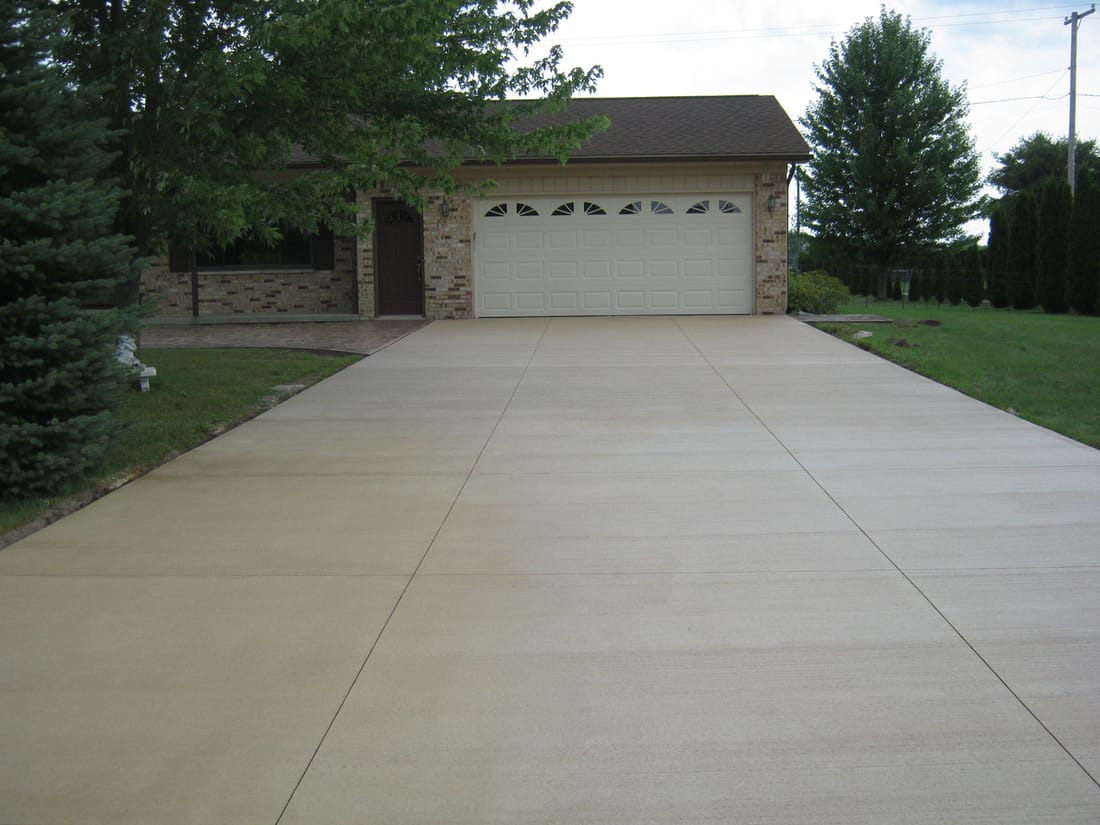
5) Concrete placement and finishing. We pour ready mix concrete with the right air entrainment for freeze-thaw durability. Crews use screeds and bull floats for a level surface, then apply a broom finish that provides traction in snow and ice. Edges are tooled for strength and a clean look.
6) Joints and curing. Control joints are cut at calculated intervals, usually within 10 to 12 hours of the pour, to help manage where shrinkage cracks form. We apply curing compounds or use wet curing methods to maintain moisture in the slab, which significantly improves long-term strength.
7) Sealing and final inspection. Once the concrete has cured sufficiently, we recommend and often apply a penetrating sealer that resists water and deicing chemicals. Before we leave, we confirm drainage performance with water tests so you do not end up with ice sheets in the winter.
Concrete mix, thickness, and reinforcement options
The mix and structure of your concrete driveway affect how it handles Omaha's temperature swings and traffic. At Superior Concrete Omaha, we do not use a one-mix-fits-all approach.
Mix design. For residential driveways we typically specify a 4,000 to 4,500 psi air-entrained concrete. The air entrainment creates tiny air pockets that give room for water to expand when it freezes. For heavier-use driveways, such as those carrying RVs, work trucks, or equipment trailers, we may increase strength or adjust aggregate size.
Thickness. A standard residential concrete driveway is often 4 inches thick. In practice, we see far better performance in Omaha when high-traffic or heavy-vehicle areas are poured at 5 inches, especially at garage entrances, turnarounds, and where the driveway meets the street. We discuss where added thickness will actually deliver value on your property, rather than simply increasing cost across the whole slab.
Reinforcement. Options include fiber reinforcement in the mix, welded wire mesh, rebar, or a combination. Fibers help with shrinkage and surface durability. Rebar or mesh is used when we expect higher loads or want extra protection around known weak points like transitions and curves. We set reinforcement on chairs or supports so it stays within the upper third to middle of the slab where it can perform correctly.
Design, layout, and finishing choices for your driveway
Function comes first, but appearance matters when your driveway is a large visual element at the front of your home. Superior Concrete Omaha can keep it simple and practical or bring in design features that elevate your curb appeal.
Layout. We adjust width for comfortable parking and maneuvering in Omaha's narrower lots or wider suburban streets. Common upgrades include adding a parking pad beside the main drive, widening near the garage doors to make door swings easier, and creating a gentle flare at the street to help with backing and snow storage.
Borders and accents. If you want more than a plain slab, we can install decorative borders, saw-cut patterns, or contrasting broom directions to create subtle design lines. For a more distinctive look, we can integrate colored concrete or exposed aggregate sections in low-traffic zones.
Finishes. The standard is a light broom finish that provides traction in snow and reduces slipperiness when wet. In shaded or north-facing areas where ice lingers longer, we may recommend a slightly more aggressive broom texture. In front-of-home highlight areas with less vehicle traffic, we can discuss stamped concrete or decorative saw cuts, with the understanding that Omaha's winters require extra attention to sealing and maintenance for these finishes.
What affects the cost of a concrete driveway in Omaha
Concrete driveway pricing is driven by more than just square footage. When Superior Concrete Omaha prepares a quote, we walk you through the specific items that influence cost on your property.
Site conditions. Extra excavation, hauling, or base material is needed when existing soil is soft, organic, or poorly compacted. Tight access that prevents concrete trucks from getting close can add to labor or require pumping.
Thickness and reinforcement. A 5 inch, rebar-reinforced driveway costs more than a 4 inch slab with fiber only, but it may be the right choice if you have heavy vehicles or a steep slope. We price these choices transparently so you can see where additional dollars improve performance and where they do not.
Layout and details. Curved edges, decorative borders, steps, and tie-ins to sidewalks or patios add labor and forming complexity. Replacing city walk panels or working near public sidewalks may involve permits or specific city of Omaha specifications, which we handle but which can affect cost.
Tear out and disposal. Removing thick or reinforced existing concrete, asphalt layers, or buried debris can change the scope. During our site visit, we probe and inspect to avoid surprises on pour day.
Season and timing. In peak months (typically late April through October), schedule flexibility can sometimes reduce cost because we can combine pours efficiently. Cold weather work can require additives, blankets, and tenting, which we will identify clearly if your project needs to proceed in late fall or early spring.
Timing, curing, and using your new driveway
Knowing when you can drive on your new concrete and how to care for it in Omaha's climate is just as important as the installation.
Best time of year. In Omaha, the most reliable window for driveway installations is late April through mid-October, when ground temperatures and daytime highs support proper curing. We can pour outside this window, but we plan for blankets, additives, and weather monitoring to protect the slab from early freezing.
Curing and early use. Typically, you can walk on a new driveway after about 24 hours. For vehicle traffic, we usually recommend waiting at least 7 days for standard passenger vehicles and 10 to 14 days for heavy trucks or RVs, depending on the mix and weather. This allows the concrete to reach sufficient strength and reduces the risk of surface damage or tire marking.
Deicing chemicals. New concrete is vulnerable during its first winter. We strongly advise against using chemical deicers that contain ammonium nitrates or ammonium sulfates. Instead, use sand or kitty litter for traction. If you must use a deicer, choose a calcium or magnesium chloride product and apply sparingly, especially in the first year.
Sealing and maintenance. A penetrating sealer helps reduce moisture and salt penetration. We typically recommend sealing new driveways after the first curing period, then reapplying every 2 to 3 years. Routine maintenance is simple: keep the slab clean, rinse off road salts in late winter, and avoid parking heavy equipment or dumpsters on the same small area for extended periods.
Why Omaha homeowners choose Superior Concrete Omaha
Concrete driveway installation is not just about pouring a slab. It is about understanding local soils, weather, and how driveways actually get used in Omaha neighborhoods. Superior Concrete Omaha brings that local focus to every project.
We are familiar with city of Omaha and nearby jurisdiction requirements for approaches and sidewalk tie-ins, so your project is installed correctly from both a performance and compliance standpoint. Our crews handle all layout, forming, reinforcement, and finishing in-house, so the people planning your driveway are the same type of professionals who will be on-site.
We encourage on-site conversations before finalizing the design. Many homeowners decide during the walk-through to adjust the width at the garage, add a small turnaround pad, or reinforce a portion for an RV. Our process is set up to make those decisions before concrete arrives, not in the middle of the pour.
If you are considering a new concrete driveway or replacing a failing one, we will inspect drainage, base conditions, and existing cracking patterns, then explain clearly what we recommend and why. That way, you know exactly what is going under and into your driveway, how long it should last in Omaha conditions, and what you can do to keep it performing year after year.